
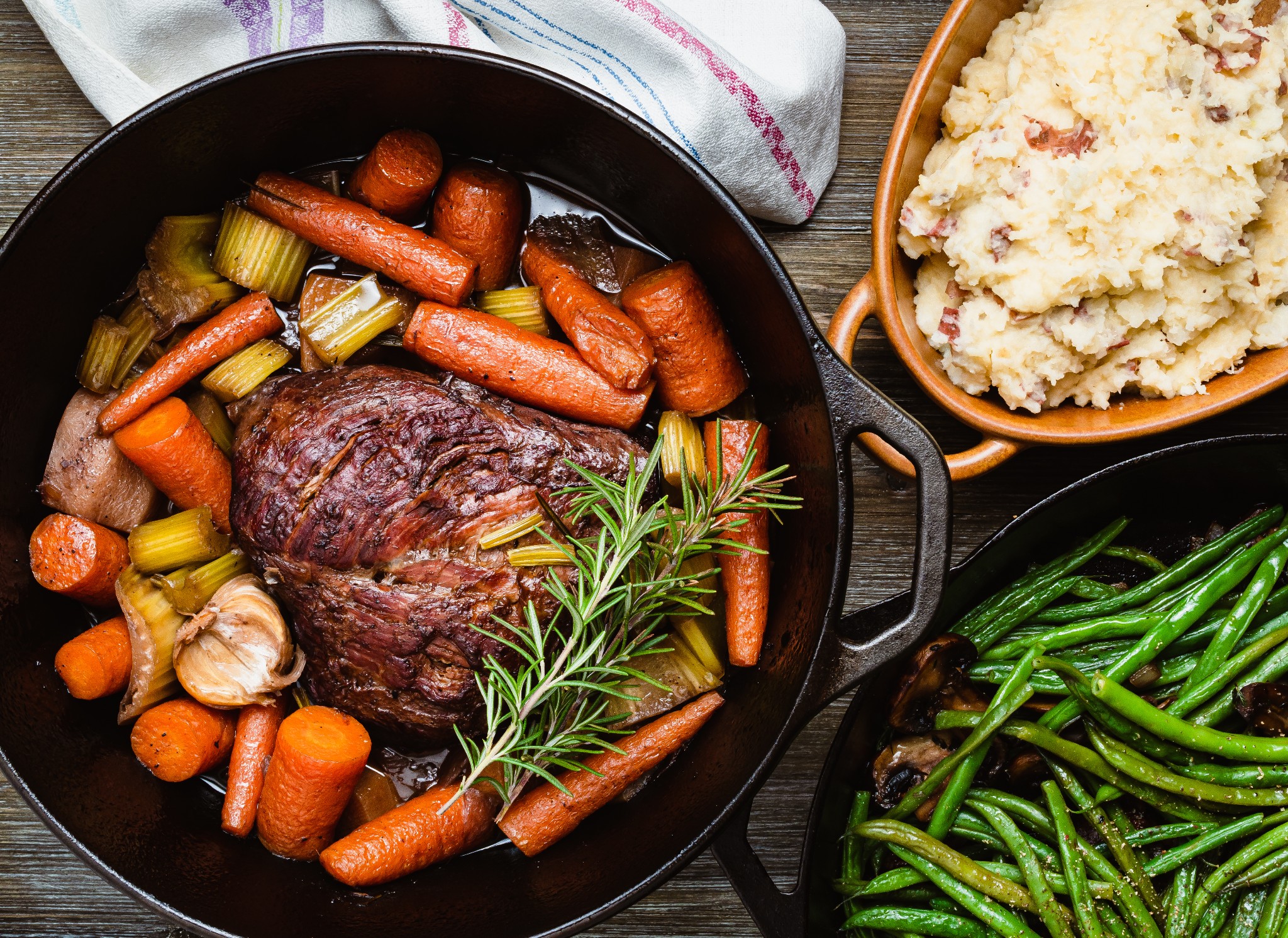
There's a reason pot roast has been a fixture of Sunday dinners for generations. It asks little of you beyond patience, and it rewards that patience with a roast so tender it gives way to a fork. This is a slow-braise recipe, so once the prep is done, all you need to do is put it in the oven.
It starts with a blade roast from your Prairie Discovery, Prairie Select or Prairie Premium Box. This cut comes from the chuck, or shoulder, a muscle rich in connective tissue that turns silky over a long, gentle braise. The key to getting the fork-tender texture is simply not rushing it — let the low, steady heat do the work.
Serves 3 to 4 · 50 minutes hands-on · 2½ to 3 hours in the oven
Cooking for more people? Your Prairie Select or Prairie Premium Box comes with two blade roasts, enough for six to eight. Use both, and scale the vegetables to 10 carrots, 8 potatoes, 2 onions, and 3 celery stalks. The garlic, tomato paste, and wine stay as they are; just top up with extra stock so it comes halfway up the meat. You'll want a roomy Dutch oven, ideally 7 quarts, with both roasts sitting side by side, and at least half an hour more in the oven.
Ingredients
- 1 Prairie Ranchers blade roast, about 900 g (1.98 lb)
- 2 tbsp olive oil
- Sea salt and freshly ground black pepper
- 1 large onion, cut into thick wedges
- 2 celery stalks, roughly chopped
- 4 cloves garlic, smashed
- 2 tbsp tomato paste
- 175 mL (¾ cup) dry red wine, or additional stock
- 500 mL (2 cups) beef stock, warmed, plus more as needed
- 2 sprigs fresh thyme
- 1 sprig fresh rosemary
- 1 bay leaf
- 6 medium carrots (about 400 g), peeled and cut into large chunks
- 4 medium Yukon Gold potatoes (about 650 g), scrubbed and halved
Method
- Take the roast out of the fridge 30-40 minutes ahead and pat it dry. A dry surface browns; a wet one steams. Season all over with salt and pepper. Heat your oven to 160°C (325°F).
- Warm the olive oil in a Dutch oven over medium heat. Sear the roast until deeply browned on every side, about 3 to 5 minutes per side. Keep the heat moderate so the surface browns richly rather than scorching. Set the roast aside.
- Add the onion, garlic, and celery to the pot and cook for 3 to 4 minutes until they soften and pick up the browned bits. Stir in the tomato paste and let it cook for a minute.
- Pour in the wine to deglaze, scraping the bottom of the pot, and let it reduce by half. Add the warmed stock, thyme, rosemary, and bay leaf.
- Return the roast to the pot. The liquid should come roughly halfway up the meat; top up with a little stock if needed. Bring it to a gentle simmer, cover, and move it to the oven.
- Braise for 1½ hours. Add the carrots and potatoes around the roast, cover again, and continue for another 1 to 1½ hours, until the vegetables are tender and the roast pulls apart easily with a fork. Start checking around the 2½-hour mark.
- Rest the roast on a board for 10 to 15 minutes. Set the pot on the stovetop, fish out the herb stems and bay leaf, and skim any fat from the surface. For a light jus, simmer the liquid for a few minutes to concentrate it, and season with salt and pepper to taste. For a thicker gravy, stir 2 tablespoons cornstarch into 2 tablespoons cold water until smooth, then whisk it into the simmering liquid a little at a time. Let it cook for a minute or two until it thickens. Slice or pull the roast and serve with the vegetables and the gravy spooned over top.
Worth the Wait
A pot roast is finished at a higher temperature than a steak. You’ll know it’s done when it's tender, and that tenderness happens when the connective tissue melts into the meat — usually at around 95°C (200°F) — so trust your fork more than the clock. If the roast isn't pulling apart easily, give it another twenty minutes in the oven (covered), and then check it again.
If you're cooking without a Dutch oven, sear the roast and soften the aromatics in a pan, then move everything to a slow cooker with the herbs, vegetables, and stock. Use less liquid than the oven method calls for, about 250 mL (1 cup) in total, since almost none of it cooks off under the lid. Seven to eight hours on low should give you the same fork-tender result.
This is prairie-to-plate cooking at its most honest, where the right ingredients and a little bit of patience add up to a meal that brings everyone to the table.
