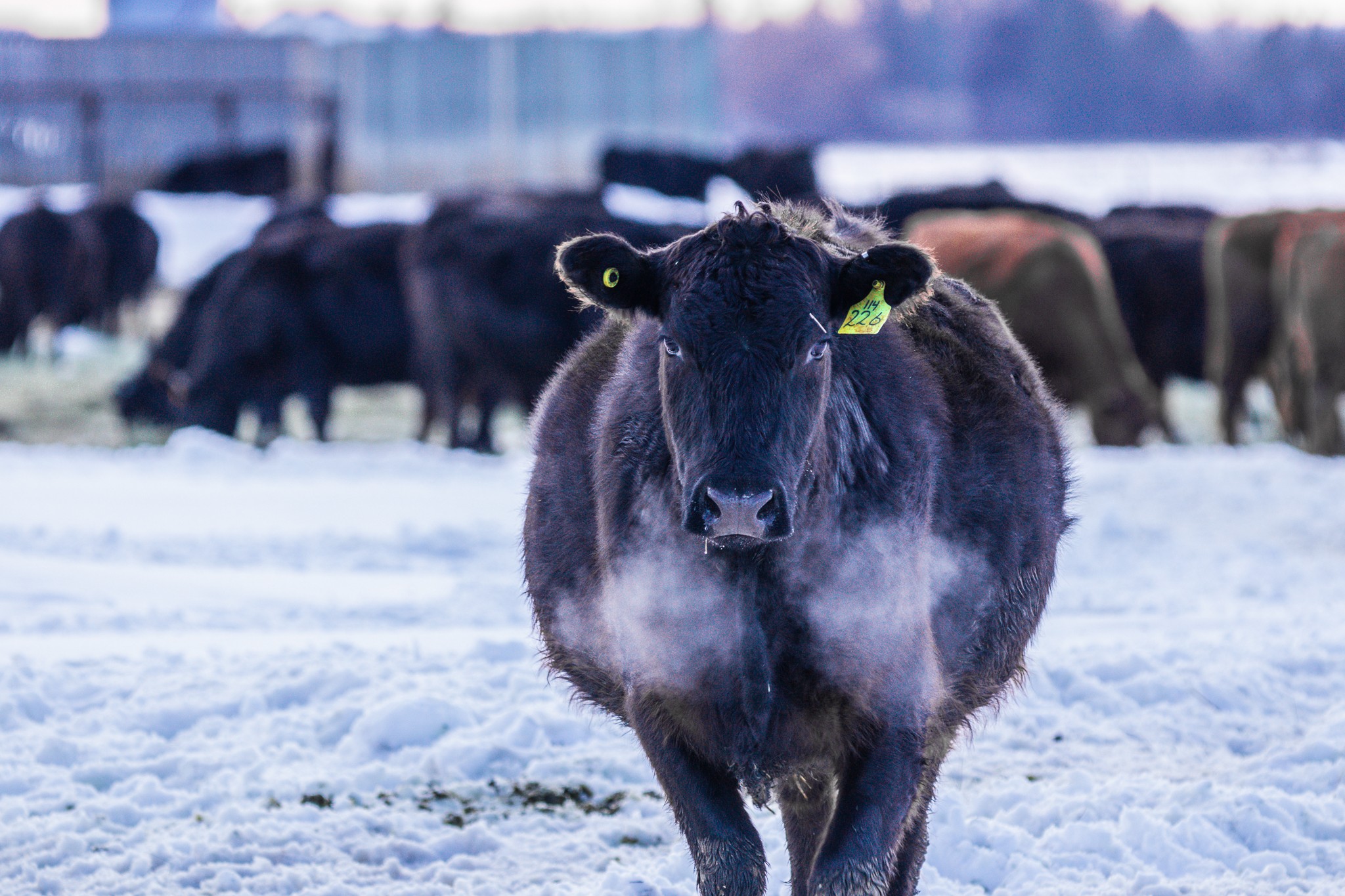
By late November, the pastures our cattle grazed on through the warmer months lie under a thick blanket of snow. The prairie has gone quiet and white, and the wind is noticeably colder. With the grazing season well behind us, our ranching families are hunkering down as winter sets in.
It’s around this time of year that our customers want to know: "If your cattle are grass-fed and finished, what on earth do they eat when there isn't a blade of grass in sight?” It’s a great question, and the answer is pretty straightforward. They keep eating grass. It's just forage we put away for them months earlier, back when the pastures were lush and growing.
Where winter feed comes from
Growing feed for the coldest months of the year takes planning. Each season, we grow more forage than the herd will graze, knowing the surplus will carry the cattle through winter. Some of that forage becomes hay — when grasses and legumes are cut, dried in the sun, and baled. Some of it becomes silage, where forage is gathered while it's still green and left to ferment, a process that preserves much of its nutritional value. Both are the same prairie grasses our herd eats all summer, saved for the day the snow arrives.
Come September, that planning is visible from the road. When you see large bales dotting a field, you're looking at winter dinners in the making. It's one of the oldest rhythms in ranching, and it's how a grass-fed herd stays grass-fed right through winter.
Diversity you can taste
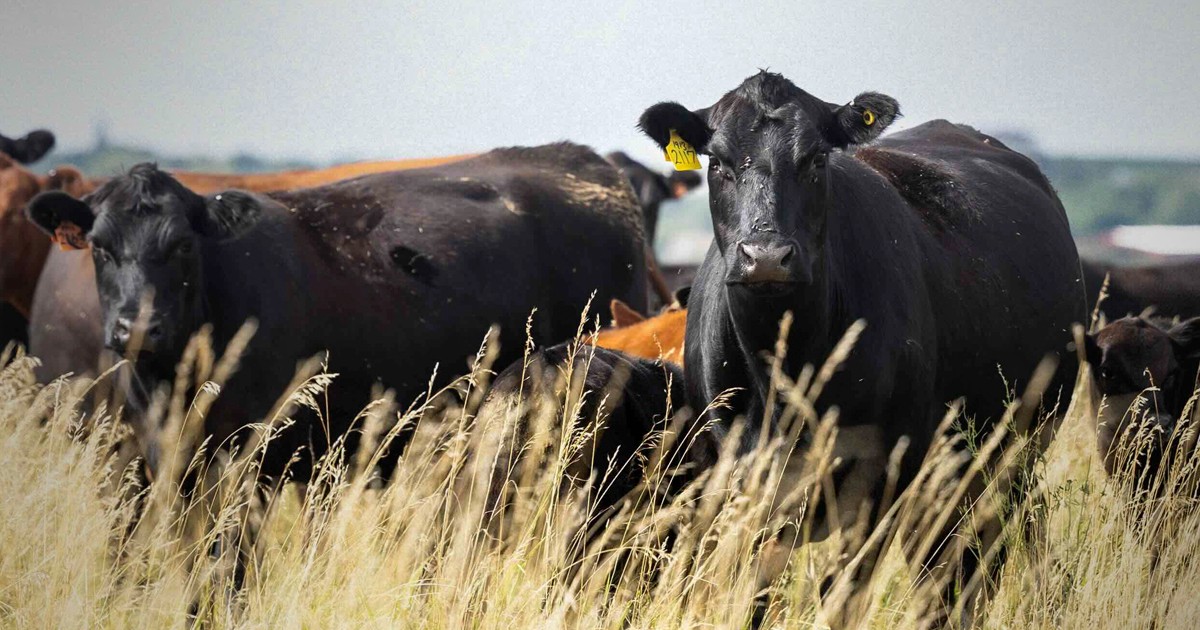
What's in that winter feed matters too. Our pastures aren't a single planted crop. They're a diverse mix of grasses and legumes, grown in soil we strive to keep as healthy as possible. When we cut and store that forage, all those plants come with it, so the hay and silage feeding the herd in January hold the same nutrients the cattle grazed on back in July.
That mix of plants makes a difference — not just to the cattle that thrive on it, but in the way the beef tastes. The rich, clean flavour you would expect from a cut of Prairie Ranchers Beef leads right back to the pastures where the grasses and legumes grew.
Cared for through the cold
A cold Alberta winter asks something of everyone, cattle included. Alongside silage and hay, the herd has shelter from the wind, room to move, and clean water, so the animals stay healthy and content until the pastures green up and the cycle begins again. It's the same patient, low-stress care we give to every cow we raise.
So while the pastures rest under the snow, very little changes for the herd. They keep eating the same grass and legumes, looked after by the same families, on the same land. That consistency, through every season, is the whole point of ranching this way, and it’s how our beef stays truly grass-fed and finished.