
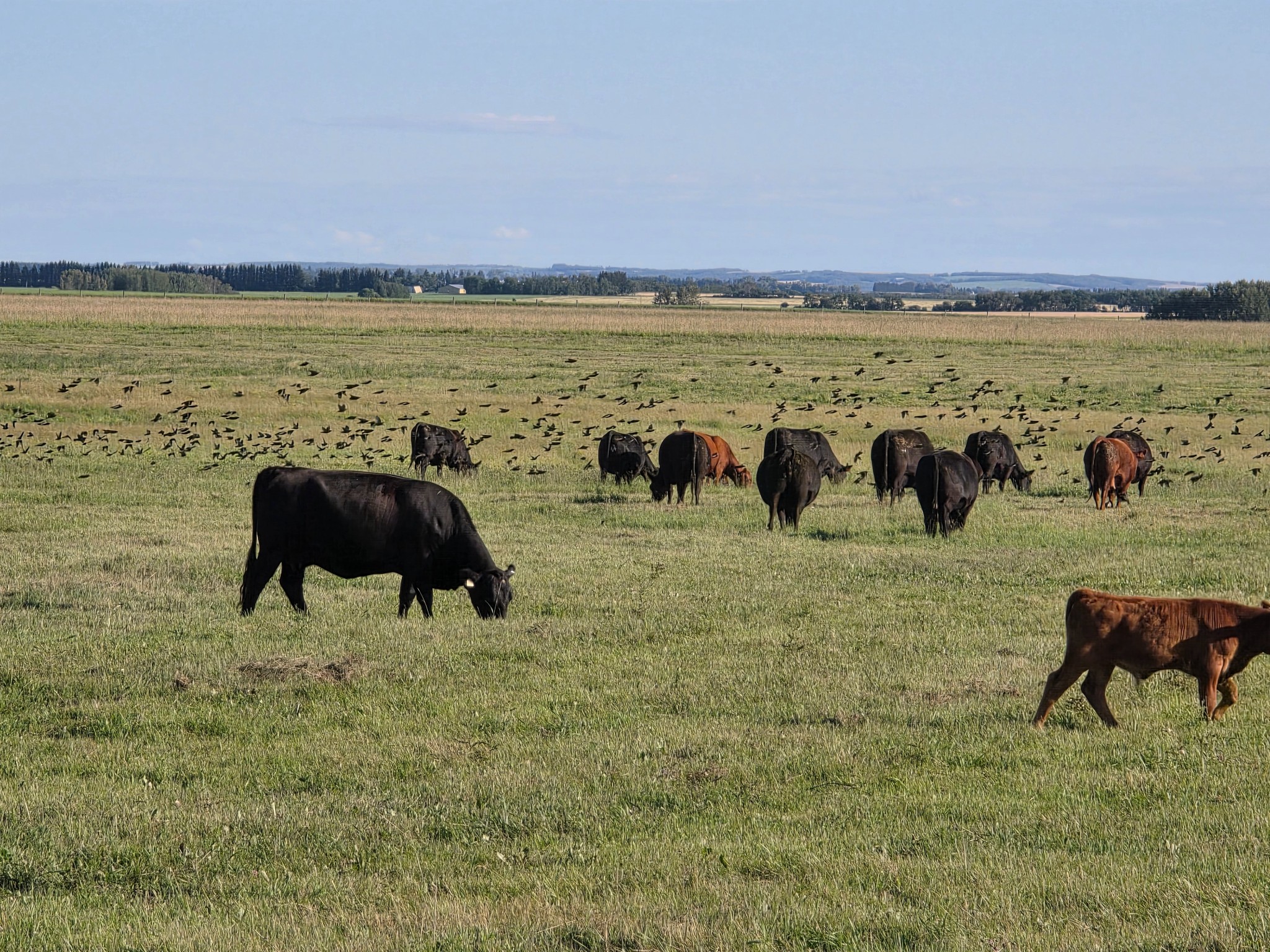
We previously wrote about how calving in late spring aligns the rhythms of the ranch with the rhythms of the prairie. The grass comes alive just as cows need it most, and the Calves arrive when the weather is milder, which allows them to get a much gentler start to life.
But once those first weeks of calving start to settle, summer soon takes over. And on a regenerative ranch, summer has its own kind of rhythm.
The Importance of Fresh Pasture
Our cattle don’t spend the summer in one spot. Instead, we move them across the land in small sections, shifting them to fresh grass as often as we can. It’s a practice that goes by a few different names — daily move grazing, rotational grazing, or mob grazing — but the principle behind it is simple. Cattle take a short, focused visit to one piece of pasture, eat what’s growing there, but not everything, leave behind their manure, and then move on.
That piece of land then gets something it doesn’t always get in other grazing systems: a nice long rest. The cattle benefit too. Fresh pasture is more nutritious, and parasite loads stay lower when animals don't return to the same paddock too often. Plus, the steady routine of moving with the herd suits them.
Letting the Land Recover
When cattle graze a plant, the plant’s response is to push energy down into its roots and then send up new growth. If the animal comes back too soon, the plant never has time to recover. Over months and years, that constant pressure weakens the plant and thins out the pasture.
But when grass is grazed once and then left alone for weeks — sometimes longer, depending on the season — the opposite happens. Roots grow deeper. New leaves come back thicker. The diversity of plants in the pasture tends to increase. And the living soil underneath, fed by those deeper roots, becomes more biologically active.
The result, over time, is healthier pastures that grow more grass per acre and hold onto water more effectively during dry stretches. Which matters on the Western Canadian Prairies, where rainfall can vary a lot from one summer to the next.
A Pattern Older Than Our Ranches
Long before our ranches were here, the Western Canadian Prairies were grazed by enormous herds of bison. They moved constantly, partly to find fresh grass and partly to stay ahead of predators. The land thrived on that pattern. The grazing was intense but short-lived. The plants were cropped once and then had weeks or months to recover before the herd came back.
The way we graze cattle in summer borrows directly from that pattern. We've adapted it to a modern ranch, but the underlying logic — short, focused grazing followed by long periods of rest — is the same one that made these prairies such a rich habitat for the bison.
What This Means for the Beef on Your Plate
When you bite into a steak from Prairie Ranchers Beef, the flavour reflects the diversity of what our cows ate — the mix of grasses, legumes, and herbs that come up across a well-managed pasture. Nutrient-rich forage produces exceptional beef, and the living soil underneath is what feeds the whole system.
Our ranching families are constantly learning, summer grazing is one of the practices we keep coming back to because the land and the cattle respond so well to it. It's a slower, more patient way to ranch, but we think it's worth it.
